
research foundation for SIT
Dr Toula’s qualitative research to explore unconscious patterns and achieve personal transformation
An Overview
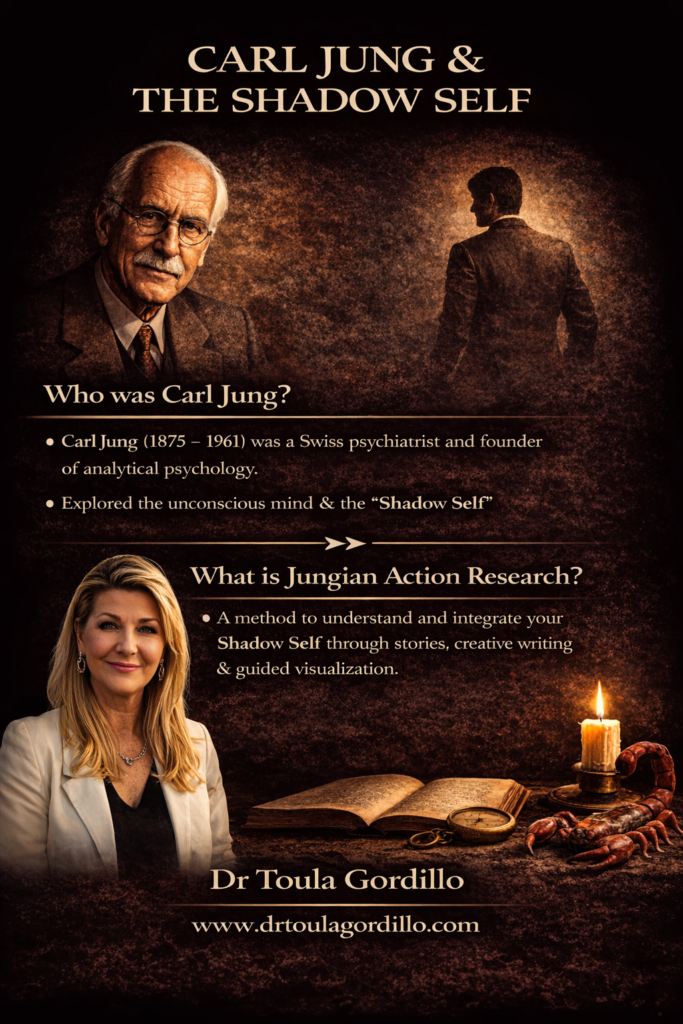
Building on Jung’s ideas, Dr Toula Gordillo developed Jungian Action Research (JAR). Her approach combines Jungian psychology with practical, creative methods for self-exploration.
A key part of the JAR process involves reflecting on the actions of certain characters in a story, particular scenes, or meaningful passages.
As people think about how these moments relate to their own experiences, they often begin to recognise deeper thoughts, feelings and reactions within themselves.
In this way, stories and images become mirrors that help bring unconscious thoughts, emotions and behavioural patterns into conscious awareness.
Through this reflective process, people start to see how their Shadow Self may influence their behaviour, relationships and decisions.
Jungian Action Research therefore provides a practical pathway for transforming insight into meaningful change.
An Overview
Building on Jung’s ideas, Dr Toula Gordillo developed Jungian Action Research (JAR). Her approach combines Jungian psychology with practical, creative methods for self-exploration.
[LEARN MORE]
A key part of the JAR process involves reflecting on the actions of certain characters in a story, particular scenes, or meaningful passages.
As people think about how these moments relate to their own experiences, they often begin to recognise deeper thoughts, feelings and reactions within themselves.
In this way, stories and images become mirrors that help bring unconscious thoughts, emotions and behavioural patterns into conscious awareness.
Through this reflective process, people start to see how their Shadow Self may influence their behaviour, relationships and decisions.
Jungian Action Research therefore provides a practical pathway for transforming insight into meaningful change.
Three Perspectives
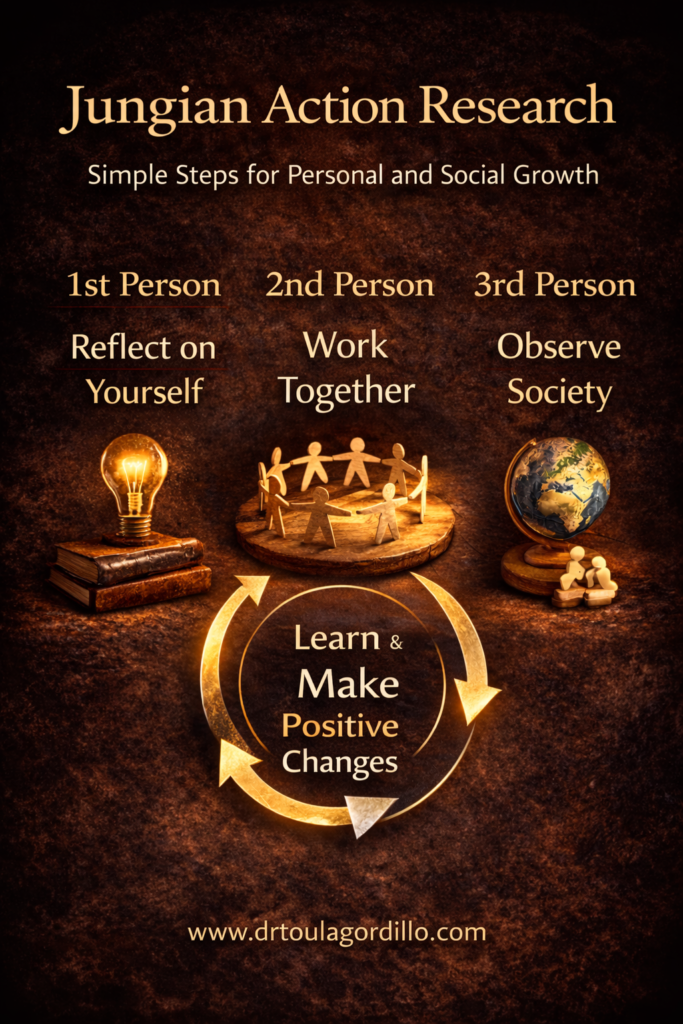
In Jungian psychology, learning happens through three connected ways of knowing: first-person, second-person and third-person inquiry. These form the foundation of Story Image Therapy (SIT®) and SIT Shadow Work™.
- First person is inner reflection noticing your thoughts, emotions, images and shadow patterns in everyday life
- Second person involves guided conversation and shared reflection with a practitioner or group
- Third person is the research and psychological theory that supports and explains the work
SIT brings these forms of inquiry together in a simple way:
- You explore your inner world through symbolic stories and images
- You receive guided support and
- You work within a research-based psychological framework
Three Perspectives
In Jungian psychology, learning happens through three connected ways of knowing: first-person, second-person and third-person inquiry. These form the foundation of Story Image Therapy (SIT®) and SIT Shadow Work™.
[READ MORE]
First person is inner reflection — noticing your thoughts, emotions, images and shadow patterns in everyday life
Second person involves guided conversation and shared reflection with a practitioner or group
Third person is the research and psychological theory that supports and explains the work
SIT brings these forms of inquiry together in a simple way:
1. You explore your inner world through symbolic stories and images
2. You receive guided support and
3. You work within a research-based psychological framework
Origins and Today
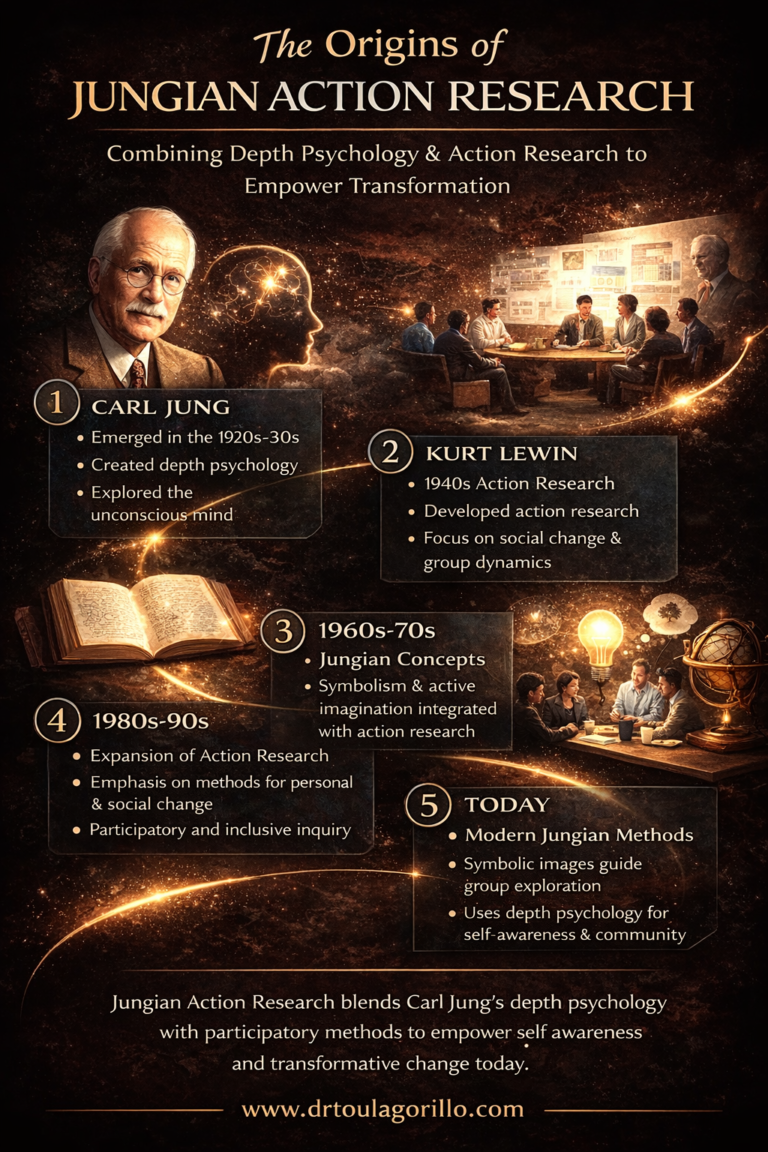
Jungian Action Research combines depth psychology with practical action to support personal and group change.
It draws on Jung’s work with the unconscious, archetypes and symbols based on an understanding our inner world is essential for growth and healing.
It also builds on Kurt Lewin’s action research, a hands-on, reflective approach to learning and problem-solving.
Today, Jungian Action Research and Story Image Therapy (SIT®) sit within transpersonal psychology, often described as the fourth wave of psychology. This is a widely known and internationally respected form of psychology in the academic community.
As a transpersonal approach, Story Image Therapy honours the psychological, emotional, cultural and spiritual dimensions of human experience, making it especially suited to deep, lasting transformation.
Why Use Tools Grounded in Jungian Action Research?
As demonstrated through 1st, 2nd or 3rd person Jungian action research, SIT tools used in SIT Shadow Work help you break free from limitations and tap into your potential to:
Integrate your Shadow
Helps bring unconscious aspects of your shadow self into conscious awareness, fostering wholeness as a person.
Support Individuation
Supports personal growth and the process of becoming one’s true Self... the capacity to 'individuate' in SIT.
Offer Meaning from Others' Experience
Uses ancient archetypes and ancestral knowledge to uncover deeper meanings and transformation.